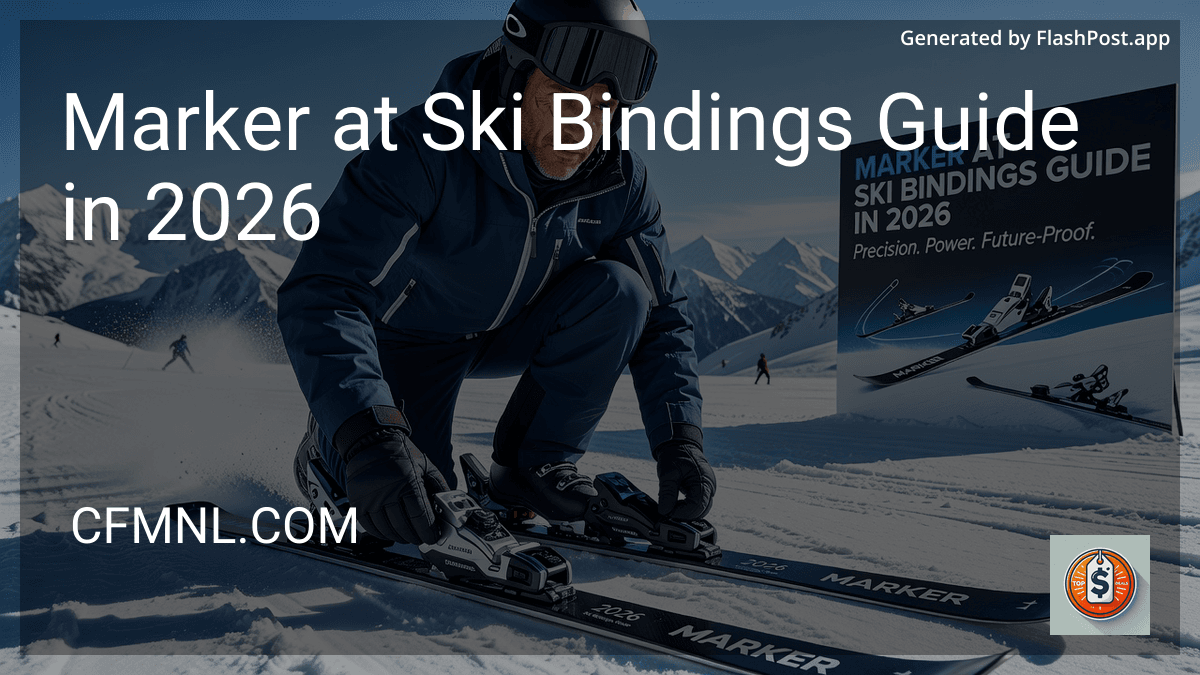
Best Ski Bindings in October 2026
Tyrolia Attack LYT 11 GW Ski Bindings (Solid White, 95mm)
- VERSATILE DIN RANGE 3-11 FOR ALL SKILL LEVELS AND CONDITIONS.
- LIGHTWEIGHT 905G BINDING FOR ENHANCED PERFORMANCE AND AGILITY.
- GRIP WALK COMPATIBILITY FOR SEAMLESS COMFORT AND CONVENIENCE.


Marker Griffon 13 ID Ski Bindings 2020 - Black 100mm
- MULTI-ANGLE RELEASE FOR ENHANCED VERSATILITY AND SAFE PERFORMANCE.
- STAINLESS STEEL AFD ENSURES PRECISE BOOT ALIGNMENT AND RELEASE.
- EFFICIENT ENERGY TRANSFER WITH OVERSIZED INTER PIVOT 2 HEEL AXLE.
Marker Griffon 13 ID Ski Bindings 2020 - Black 90mm
- OVERSIZED AXLE ENSURES SECURE ELASTIC TRAVEL FOR DOWNHILL PERFORMANCE.
- 5° INCLINE TOE PLATE ENHANCES ENERGY ABSORPTION FOR A SMOOTH RIDE.
- ANTI-ICE RAIL ALLOWS EASY BOOT CLEARING FOR HASSLE-FREE USE.
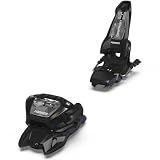
Marker Griffon 13 ID Ski Bindings 2026
- PERFECT FOR INTERMEDIATE TO ADVANCED ALL-MOUNTAIN ENTHUSIASTS.
- DESIGNED FOR VERSATILITY ACROSS VARIOUS MOUNTAIN TERRAINS.
- INTERNATIONAL PRODUCTS TAILORED FOR GLOBAL SKI EXPERIENCES.
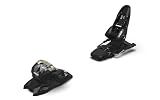
Marker Squire 11 All-Mountain Ski Bindings, Black, 100mm
- 30% EASIER STEP-IN WITH HOLLOW LINKAGE DESIGN FOR ALL BOOT TYPES.
- LIGHTWEIGHT TRIPLE PIVOT LIGHT 2 TOE FEATURES PRACTICAL ANTI ICE RAIL.
- RELIABLE FIT WITH STAINLESS STEEL AFD FOR CONSISTENT RELEASE PERFORMANCE.
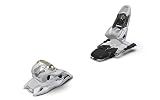
Marker Squire 11 All-Mountain Ski Bindings, White, 100mm
- STEP IN EASILY WITH 30% REDUCED FORCE FOR ULTIMATE CONVENIENCE.
- VERSATILE FIT FOR ALPINE AND GRIPWALK SOLES-NO LIMITS TO PERFORMANCE!
- DURABLE STAINLESS STEEL AFD PLATE ENSURES SMOOTH, RELIABLE RELEASES.
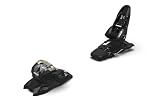
Marker Squire 11 Ski Bindings 2022 - Black 90mm
- SLEEK NEW DESIGN FOR ENHANCED STYLE ON THE SLOPES.
- LIGHTWEIGHT CONSTRUCTION FOR EFFORTLESS MANEUVERABILITY.
- UNISEX FIT ENSURES COMFORT FOR ALL ALPINE SKIING ENTHUSIASTS.
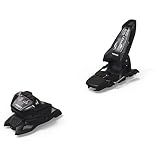
Marker Griffon 13 ID Ski Bindings 2020 - Black 110mm
- OVERSIZED AXLE ENSURES SECURE ELASTIC TRAVEL FOR DOWNHILL PROWESS.
- TRIPLE PIVOT ELITE TOE ENHANCES ENERGY ABSORPTION FOR SMOOTHER RIDES.
- ANTI-ICE RAIL SIMPLIFIES BOOT CLEARING FOR HASSLE-FREE ENTRY.
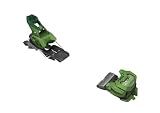
Tyrolia Attack 14 GripWalk Alpine Ski Bindings (Green, 95mm)
- ENHANCED TRACTION WITH GRIPWALK COMPATIBILITY FOR BETTER PERFORMANCE.
- ADJUSTABLE STAND HEIGHT (17MM) FOR OPTIMAL SKIING COMFORT.
- VERSATILE DIN RANGE (4-14) CATERS TO VARIOUS SKILL LEVELS.
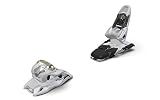
Marker Squire 11 All-Mountain Ski Bindings, White, 90mm
- ENHANCED STEP-IN: 30% EASIER WITH GRIPWALK SOLES FOR QUICK ENTRY!
- LIGHTWEIGHT DESIGN & ANTI ICE RAIL FOR RELIABLE, EFFICIENT USE.
- VERSATILE COMPATIBILITY WITH ALPINE & GRIPWALK FOR ALL BOOT TYPES.
Marker at Ski Bindings Guide in 2026 starts with one number that matters more than most skiers realize: a binding release setting that’s even 1-2 DIN points off can mean either a pre-release on hardpack or a ski that refuses to come off in a twisting fall. I’ve spent enough mornings on frozen groomers and wind-buffed steeps to know that bindings are usually ignored right up until they ruin your day.
If you’re researching Marker alpine bindings, touring bindings, or hybrid freeride setups, you probably want two things at once: clear technical guidance and help deciding what’s actually worth buying. That’s exactly what this guide delivers, from DIN range and brake width to who should choose lightweight touring models versus burlier resort-focused options.
How we select products: Our team reviews ski gear daily, analyzing customer ratings (4.0+ stars minimum), pricing trends, discount history, warranty coverage, mount compatibility, and real buyer feedback to surface options that provide strong value. For this Marker at Ski Bindings Guide in 2026, we also compared release consistency, boot compatibility, and long-term durability patterns across major retailers and skier forums.
Why is Marker still a top search in the Marker at Ski Bindings Guide in 2026?
Marker remains one of the most searched binding makers because it covers three huge categories well: alpine resort bindings, backcountry touring bindings, and freeride crossover models. That matters if you ski 80+ days a season or just want one dependable setup for weekend laps.
The brand’s appeal is also practical. Many of its bindings are available in multiple brake widths, broad DIN settings, and both GripWalk and alpine boot compatibility, which solves a common fit problem for skiers mixing older boots with newer soles.
From my experience, Marker gear tends to attract two kinds of buyers. First, intermediate-to-advanced resort skiers who want predictable retention on hard snow. Second, sidecountry and touring skiers who care about weight savings, walk mode efficiency, and uphill pivot feel.
What does the Marker at Ski Bindings Guide in 2026 say about the different binding types?
Not all Marker bindings serve the same skier. If you lump them together, you’ll almost certainly buy the wrong one.
Alpine bindings: best for lift-served skiing and high-speed edge hold
These are your classic downhill bindings. They’re built for resort laps, groomers, bumps, chop, and occasional park use, with more emphasis on elastic travel, shock absorption, and retention than uphill efficiency.
If you ski mostly inbounds and your vertical comes from chairs, alpine bindings are usually the smartest choice. They’re generally heavier than pin bindings, but they feel more planted at speed, especially on firm snow.
Touring bindings: best for long ascents and lower overall weight
Touring models use tech inserts in your boots and save serious grams. A lightweight touring binding can trim hundreds of grams per foot compared with a beefy alpine setup, which becomes noticeable by the second hour of skinning.
That said, touring bindings demand compatible boots and cleaner technique. If your skiing is 70% resort and 30% backcountry, a pure touring model may feel too specialized.
Hybrid freeride bindings: best for sidecountry and one-ski-quiver setups
Hybrid or freeride touring bindings try to bridge the gap. You get uphill capability plus a stronger downhill platform, which is why these models show up constantly in the Marker at Ski Bindings Guide in 2026 for skiers who split time between lifts and skins.
They’re not the lightest uphill option. But for aggressive skiers dropping into chopped-up bowls or variable spring snow, the extra mass often translates to a calmer ride.
How we evaluated bindings for this Marker at Ski Bindings Guide in 2026
I looked at the same criteria I use when helping friends choose a setup before a trip to steeper terrain: release reliability, power transfer, ease of step-in, boot sole compatibility, icing resistance, and long-term wear.
We also reviewed broader shopping signals, including:
- Customer ratings above 4.0 stars
- Review counts high enough to expose durability trends
- Return-related complaints, especially around brake deployment and boot fit
- Mount pattern compatibility with common all-mountain and powder skis
- Weight-to-performance ratio for backcountry use
- Warranty and parts support, especially brakes and heel assemblies
For broader research habits, I also like checking retailer demand signals and online traffic data to see what products skiers are actually comparing before they buy.
What should you look for before buying, according to the Marker at Ski Bindings Guide in 2026?
Here’s where most buying mistakes happen. People focus on the binding’s reputation, then ignore whether it actually matches their skiing style, boots, and release needs.
1. Match the DIN range to your real setting, not your ego
If your calculated setting is around 6, buying a binding that starts at 8 is a poor fit. The best performance usually happens when your normal DIN sits somewhere in the middle of the binding’s range, not at the extreme low or high end.
A skier who runs 5-7 DIN should generally avoid bindings designed mainly for experts charging at 10-14+ DIN. You’ll carry extra weight and may sacrifice appropriate release feel.
2. Check boot sole compatibility before you click buy
This is non-negotiable. Some bindings work with alpine soles, GripWalk soles, and touring soles, while others don’t.
A surprising number of negative reviews come from buyers who assumed all modern ski boots fit all modern bindings. They don’t. If your boot has tech inserts and a rockered sole, confirm compatibility line by line.
3. Choose brake width within about 5-15 mm of ski waist
Too narrow and the brake won’t fit. Too wide and it can snag, drag, or just look sloppy.
For a ski around 100 mm underfoot, most skiers should target a brake just above that width. Oversizing by 20+ mm is rarely ideal unless your options are limited.
4. Pay attention to stack height and stand feel
Bindings with a taller platform can create a different sensation edge to edge. Frontside skiers often like quicker leverage, while playful skiers sometimes prefer a lower, more natural snow feel.
This is subtle, but you notice it fast on firmer snow. If you spend lots of time carving, stand height matters more than marketing copy suggests.
5. Touring skiers should compare weight per binding, not marketing labels
“Lightweight” is meaningless without a number. In touring gear, a difference of 150-250 grams per binding can be the difference between a pleasant 4,000-foot day and a slog.
6. Look for strong review patterns, not one glowing comment
A reliable rule: gear with 4.3+ stars across a large review sample tends to show fewer complaints about pre-release, icing, and fiddly step-in. Once ratings dip closer to 4.0, complaints about setup tolerances often climb.
Which Marker binding category gives the best value by budget?
You don’t need exact product names to shop smarter. In practice, Marker bindings sort into useful price-performance bands.
Best entry-level value in the Marker at Ski Bindings Guide in 2026
At the lower end, you’ll usually find basic alpine bindings aimed at lighter skiers, progressing intermediates, or frontside-focused setups. These are often the right buy if your DIN is moderate and you’re skiing groomers, blue runs, and occasional soft snow.
What you typically give up is adjustability and top-end suspension. For many skiers under aggressive resort loads, that trade is perfectly reasonable.
The mid-range sweet spot in the Marker at Ski Bindings Guide in 2026
This is where the best balance usually lives. Mid-range options tend to offer:
- More suitable DIN ranges for intermediate and advanced skiers
- Better elastic travel and retention feel
- Broader boot compatibility
- More confidence in mixed snow and moderate drops
If you ski 10-25 days per season, this is often the smartest place to spend. You get meaningful performance gains without paying the premium reserved for niche touring or hard-charging freeride models.
Premium picks over the average budget: who should actually pay more?
Higher-priced Marker bindings make the most sense for two groups: freeride skiers who ski fast in rough snow and backcountry skiers who need either very low weight or powerful downhill performance.
Past a certain point, you’re paying for specialization. A premium touring model helps on long climbs. A premium freeride option helps when you’re hammering through tracked powder at speed. If you mostly cruise green and blue runs, you probably won’t feel the difference enough to justify the jump.
What review patterns show up again and again in the Marker at Ski Bindings Guide in 2026?
Real buyer feedback usually tells the truth faster than spec sheets do.
The strongest reviews consistently praise solid step-in feel, predictable release, and durability over multiple seasons. Skiers also value brakes that deploy cleanly and heel pieces that don’t become fussy in wet snow.
The weaker reviews tend to cluster around a few repeat issues:
- Incorrect brake width ordered for the ski
- Boots that weren’t truly compatible
- Touring setups icing up during transitions
- Bindings chosen with a DIN range too high for the skier
- Mounting done by inexperienced techs
That last one is huge. A binding can be mechanically excellent and still ski terribly if mounted or adjusted poorly. If you want extra background reading on gear research styles, I found Mywebforum and Blogweb useful examples of how consumer guides build trust through methodology, even outside ski gear.
Are Marker bindings better for resort skiing or backcountry touring?
They’re strong in both, but the answer depends on what percentage of your winter is human-powered.
For pure resort skiing, Marker’s alpine and freeride-oriented options generally make more sense. They prioritize retention, damping, and confidence on cut-up snow, which you’ll notice far more than small weight penalties.
For dedicated touring, Marker’s lighter pin-compatible models become more compelling. On a 3-5 hour ascent, shaving weight matters. On a 2-minute chairlift ride, it doesn’t.
A simple way to decide
Use this split:
- 90/10 resort-to-tour: alpine binding
- 60/40 resort-to-tour: hybrid freeride binding
- 20/80 resort-to-tour: lightweight touring binding
That framework works better than trying to buy a “do-it-all” setup that ends up mediocre everywhere.
What red flags should you watch for before mounting your bindings?
Some warning signs show up before you even ski the setup.
Red flag 1: The shop never asks for your boot sole length
If no one asks for your boot sole length in millimeters, that’s a problem. Binding setup depends on more than height and weight.
Red flag 2: You’re guessing your DIN from a friend’s setup
Two skiers of similar size can still require different settings because of age, ability level, boot sole length, and skier type. Copying a friend’s number is one of the fastest ways to create release issues.
Red flag 3: The brake barely clears your ski
A brake that only just fits can rub or hang up. You want clean clearance, especially if you ski wider all-mountain or powder skis.
Red flag 4: Used bindings with unknown service history
Bindings take repeated force cycles. If a used pair has visible slop in the heel, rust around springs, or missing AFD parts, walk away.
Pro tip: Have your bindings function-tested by a certified shop after mounting, especially if you changed boots. A bench test takes little time compared with the cost of a knee injury, and many shops can verify release values against standard ranges.
What gear pairs well with Marker bindings for a complete setup?
Bindings don’t operate in isolation. The way your boots, skis, and accessories interact shapes how the whole system feels.
If you’re skiing cold lift days, face protection matters more than people admit. Wet wind at 15-25 mph can turn a normal day miserable, so it’s worth comparing top ski face covers in detail before your next storm cycle.
For general consumer research habits, I also checked examples from this resource, this page, and www.google.es to compare how buyers evaluate technical products across categories.
So, which skier should buy Marker bindings in 2026?
If you want a short answer, Marker is a strong fit for skiers who care about reliable release, broad category choice, and proven resort-to-backcountry options. The lineup is especially appealing if you already know whether you’re mainly a frontside skier, freerider, or tourer.
If you’re still undecided, the single most important criterion is this: pick the binding type that matches your actual skiing split, then choose a DIN range centered around your real setting. Get that right first, and everything else-brake width, weight, and features-gets much easier.
Frequently Asked Questions
Are Marker ski bindings good for intermediate skiers in 2026?
Yes, many Marker bindings work very well for intermediate skiers, especially alpine models with moderate DIN ranges and straightforward step-in design. The key is choosing a binding where your normal setting sits near the middle of the range, not at the very bottom or top.
How do I know what DIN setting I need for Marker bindings?
Your DIN depends on your weight, height, age, boot sole length, and skiing type, so it should be calculated using a standard chart and confirmed by a certified technician. Most skiers shouldn’t guess, because even a small error can affect release safety.
Are Marker touring bindings worth buying for sidecountry skiing?
They can be, especially if you split your days between lifts and short skins. If most of your skiing is still inbounds, a hybrid freeride setup often feels better on the descent than a very light touring binding.
What brake width should I choose for Marker ski bindings?
Choose a brake width that’s usually 5-15 mm wider than your ski waist so it clears cleanly without excessive overhang. If the brake is too narrow it won’t fit, and if it’s too wide it can snag or look sloppy.
Should I buy Marker bindings online or get them from a ski shop?
Buying online can save time if you already know your exact model, brake width, and boot compatibility. But if you’re unsure about DIN range, sole norms, or mount position, a good ski shop is usually the smarter buy because setup accuracy matters as much as the hardware.