
Best Cooperative Board Games in October 2026
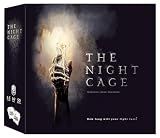
Smirk and Dagger The Night Cage | Cooperative Candlelit Horror Strategy Game, Tile Laying Labyrinth Escape Adventure, For 1 to 5 Players, Ages 14+
- NAVIGATE A SHIFTING MAZE UNDER CANDLELIGHT FOR THRILLING TEAMWORK!
- FACE FEAR WITH STRATEGIC CHALLENGES IN A GRIPPING HORROR EXPERIENCE!
- ENJOY ADJUSTABLE DIFFICULTY FOR ENDLESS REPLAY VALUE AND FRESH THRILLS!



Gamewright Forbidden Jungle, Coop Strategy Board Game, 2-5 Players | Work Together Team Challenge, 30-45 Minute Game, Two Player Strategy, 47 Miniatures, Family Game Night, Adventure Play
-
TEAMWORK ADVENTURE: UNITE, STRATEGIZE, AND CONQUER THE JUNGLE TOGETHER!
-
QUICK GAMING: ENJOY THRILLING 30-45 MINUTE GAMEPLAY FOR BUSY NIGHTS.
-
INCLUSIVE FUN: PERFECT FOR 2-5 PLAYERS, CRAFT MEMORABLE GAME NIGHTS!
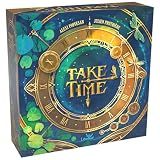
Take Time Board Game | Cooperative Puzzle & Strategy Game with 40 Unique Challenges, Family Fun for Kids & Adults, Ages 10+, 1-4 Players, 30 Mins
- ENGAGE IN COOPERATIVE PUZZLE-SOLVING FOR HOURS OF FUN!
- 40 UNIQUE TESTS THAT BOOST COMMUNICATION AND STRATEGY SKILLS!
- IDEAL FOR FAMILIES AND FRIENDS WITH REPLAYABLE CHALLENGES!
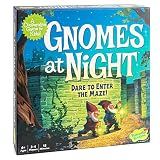
Peaceable Kingdom Gnomes at Night A Cooperative Maze Game for 2 to 4 Kids Ages 6+
-
COOPERATIVE FUN: TEAM UP TO NAVIGATE THE MAZE AND FIND TREASURES!
-
COMMUNICATION BOOST: ENHANCE SKILLS WHILE RACING AGAINST THE CLOCK!
-
UNIQUE MAZES: EACH SIDE OFFERS NEW CHALLENGES FOR THRILLING GAMEPLAY!
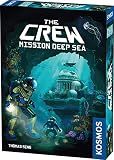
The Crew: Mission Deep Sea | Cooperative Card Game | Search for the Lost Land of Mu | Trick-Taking Tabletop Game | 32 Difficulty Levels | Ages 10+ | 3-5 Players | 20 Min Playtime
- DIVE INTO TEAMWORK: LIMITED COMMUNICATION ENHANCES STRATEGIC PLAY!
- PROGRESSIVE CHALLENGE: ENJOY RISING DIFFICULTY FOR ALL SKILL LEVELS!
- UNCOVER SURPRISES: NEW UNDERWATER TWISTS IN A BELOVED CLASSIC!
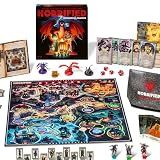
Ravensburger Horrified Games – Dungeons & Dragons – Strategy Board Game – Boost Critical Thinking & Teamwork – Cooperative Gameplay – Unique Monster Challenges – 1 to 5 Players – Adults & Kids 10+
-
TEAM UP AGAINST ICONIC D&D MONSTERS IN AN EPIC ADVENTURE!
-
BOOST CRITICAL THINKING AND TEAMWORK IN THRILLING COOPERATIVE PLAY.
-
STUNNING VISUALS AND ENDLESS REPLAYABILITY MAKE EVERY GAME NIGHT FUN!
Pandemic Cooperative Strategy Board Game, 2-4 Players, 45-60 Min | For team play, cure diseases before time runs out, Rewards planning and communication, Deep strategy with strong replay
- COLLABORATIVE STRATEGY: UNITE TO FIGHT GLOBAL OUTBREAKS AND WIN!
- UNIQUE ROLES: CHOOSE SPECIALISTS TO AMPLIFY YOUR TEAM'S STRATEGY.
- EXCITING GAMEPLAY: EXPERIENCE TENSE DECISIONS IN EVERY ROUND!
Hasbro Gaming Avalon Hill Betrayal at The House on The Hill 3rd Edition Cooperative Board Game,Ages 12 and Up,3-6 Players,50 Chilling Scenarios
- THRILLING NEW CONTENT: DISCOVER HORROR ELEMENTS AND CHARACTERS ANEW!
- STRATEGIC COOPERATION: UNITE TO SURVIVE; ONE PLAYER BECOMES THE TRAITOR!
- ACCESSIBLE FOR BEGINNERS: EASY-TO-FOLLOW GUIDES FOR NEW PLAYERS INCLUDED!
How to Pick Cooperative Board Games for Two in 2026? starts with one hard truth: a game that sings at four players can feel flat, swingy, or over-scripted at two. I’ve learned that the fastest way to waste a game-night budget is buying a highly rated co-op that actually relies on table chatter, role overlap, or chaos from a bigger group.
For two players, the sweet spot is narrower. You need tight scaling, fast turns, meaningful coordination, and enough replay value that the puzzle still feels alive on the tenth session. That’s exactly what this guide covers, with practical criteria you can use before you buy anything.
How we select products: Our team reviews games and consumer trends year-round, analyzing user ratings, rules complexity, player-count scaling, replay value, and real buyer feedback to surface options that deliver strong value. For co-ops, we give extra weight to titles that maintain tension and decision density at exactly two players, not just at their maximum count.
How to Pick Cooperative Board Games for Two in 2026? Start With Player-Count Scaling
The best cooperative board games for two players are designed so each person has enough to do every round. If one player becomes the “main planner” while the other just executes obvious moves, the game may still be good at three or four, but it’s weak at two.
Look for a rules sheet or product listing that explicitly supports 2 players rather than “2+” as an afterthought. In my experience, the strongest cooperative 2 player board games either give each player multiple meaningful actions per turn or create asymmetry so both roles feel distinct.
Here’s the simplest rule: if a co-op depends on hidden information, timed pressure, or hand management, it usually scales better to two than a co-op driven only by open-table optimization. That’s why many cooperative deck building board games and scenario-based campaigns hold up so well in a smaller group.
The 2026 two-player test I use before recommending any co-op
I use five quick filters:
-
Downtime under 90 seconds per turn
At two players, long turns feel even longer because there’s nowhere to hide. Good co-op design keeps both players mentally engaged every round. -
A real loss condition by round 3 or 4
The best cooperative strategy board games create pressure early. If failure feels impossible for the first half of the session, tension usually collapses. -
Distinct decision space for each player
You want “I can help” moments, not “I’ll tell you what to do” moments. This matters more than theme. -
Session length that matches the puzzle
For two players, 30-60 minutes is often the strongest value range for repeat play. Longer campaign boxes can work, but only if setup stays manageable. -
Replay hooks beyond random setup
Variable enemies, branching scenarios, modular maps, or evolving card markets are stronger replay tools than one shuffled deck alone.
What are cooperative board games, and why do some work better at two?
What are cooperative board games? They’re games where you and the other player work against the system rather than against each other. You win together, lose together, and spend most of the session coordinating actions, sharing resources, or solving a tactical puzzle.
That said, not all board games cooperative by label feel good as a duo. Some cooperative games board designs are really social deduction engines or table-wide planning exercises, which means they lose energy when only two people are talking.
The best best cooperative board games for couples, roommates, or close friends usually deliver one of three experiences:
- Tactical survival, where every move matters
- Narrative adventure, where choices reshape the scenario
- Engine-building teamwork, where your powers combine over time
If you enjoy campaign progression, you may also like adjacent recommendation lists on Topdealsnet, even though family and adult co-op needs differ sharply.
How to Pick Cooperative Board Games for Two in 2026? Use These 7 Buying Criteria
This is where most shoppers get it wrong: they buy by theme first. Theme matters, but at two players, structure matters more.
1. Check whether the game solves the “quarterbacking” problem
Quarterbacking is when one player can see the optimal move and starts directing the whole game. It’s the biggest reason many good cooperative board games get mixed long-term reviews.
The best fix is partial information, simultaneous play, or role asymmetry. If the game includes secret hands, unique powers, or turn-order pressure, it’s more likely to stay collaborative rather than bossy.
2. Match complexity to your real weeknight energy
A rules weight that feels exciting on Saturday can feel exhausting on a Tuesday night. For most duos, the best best cooperative games board option lands in the medium-complexity range: enough depth to stay fresh, but not so much overhead that setup becomes the main event.
A useful benchmark: if teach time is over 20 minutes, make sure the game promises at least 8-10 distinct sessions of replay value.
3. Prioritize scaling language, not just box claims
A box might say “2-5 players,” but that doesn’t mean every count is equally strong. Read for clues like “adjusted map,” “reduced enemy health,” “dual-hand variant,” or “dedicated two-player mode.”
If none of that appears, the game may simply remove pieces instead of rebalancing systems. That’s a yellow flag for cooperative board games for 2 players.
4. Pick a tension style you’ll actually replay
Not all co-op stress feels the same. The major categories are:
- Puzzle pressure: efficient move sequencing and hand management
- Narrative pressure: scenario outcomes and branching consequences
- Combat pressure: enemy positioning, damage, and survival clocks
- Panic pressure: timers, hidden info, and escalating chaos
If you prefer dread and survival, some cooperative horror board games are excellent at two because fear scales emotionally, not mathematically. If you prefer efficiency and combo-building, cooperative deck building board games usually offer cleaner replay loops.
5. Watch setup and teardown time closely
For two-player gaming, setup friction matters more than most buyers think. A 45-minute game with a 12-minute setup often gets played less than a 30-minute game with a 3-minute setup.
My rule: if setup takes more than 20% of session length, the box needs exceptional depth to earn shelf space.
6. Confirm whether luck creates drama or frustration
Dice, card draws, and event decks can energize a co-op or make it feel arbitrary. The strongest cooperative adventure board games give you tools to mitigate bad luck rather than simply absorb it.
Look for rerolls, hand cycling, resource conversion, or multiple viable objectives. Those mechanics turn randomness into tactical adaptation.
7. Buy for campaign commitment honestly
Some two-player co-ops shine in one-offs. Others only become great after 5+ sessions. If you’re not confident you’ll keep a campaign going for a month, a standalone scenario game may be the better buy.
Best budgets for cooperative board games for two players in 2026
Price still matters, especially because co-op games often tempt you with expansions. The best value depends less on raw cost and more on how often the game reaches your table.
| Budget range | What you usually get | Best for | Watch out for |
|---|---|---|---|
| Entry-level | Compact boxes, shorter sessions, lower rules overhead | New players, casual couples, travel-friendly shelves | Thin replay value after 5-6 plays |
| Mid-range sweet spot | Better components, deeper systems, stronger scaling | Most buyers seeking best cooperative board games | Occasional setup creep |
| Premium tier | Campaign content, modular systems, heavier strategy | Dedicated duos who play weekly | Long commitment and storage demands |
Entry-level: best for trying board games cooperative without a huge commitment
At the low end, the winners are usually fast-playing puzzle or card-driven co-ops. These are ideal if you want to test whether you actually enjoy cooperative two player board games before moving into bigger campaign boxes.
A good entry-level benchmark is a game that plays in 20-40 minutes and still feels tense by the midpoint. If the early turns are routine, replay value tends to fall off quickly.
Mid-range: the sweet spot for best cooperative board games
This is where I’d steer most readers. The mid-range market typically offers the best balance of depth, scenario variety, and two-player scaling, which is why so many best board games cooperative recommendations land here.
You’ll usually find the strongest mix of:
- asymmetric roles
- meaningful difficulty settings
- campaign or modular replay
- production quality that supports frequent play
Premium tier: worth it only if you want a lifestyle game
High-end co-ops can be brilliant, especially if you want campaign progression, unlockable content, or deeply interlocking systems. But for many buyers, premium boxes are overkill unless you know you want a game to anchor 10-20 sessions.
That same buy-carefully logic applies in other enthusiast categories too, whether you’re comparing slim mechanical keyboards or a giant co-op campaign box.
Which types of cooperative games board designs are best for two?
Different mechanisms produce very different two-player experiences. If you want a definitive ranking, here’s mine for 2026.
1. Best overall for most duos: cooperative strategy board games
These tend to be the most consistently satisfying because they reward planning without needing a big group. The best ones create hard trade-offs every turn and keep both players equally involved.
If you want a safe starting point, cooperative strategy board games are usually the best genre for repeat weeknight play.
2. Best for replay loops: cooperative deck building board games
These shine at two because card markets and hand management naturally create shared planning. You can specialize without becoming redundant, and the game state evolves in visible, satisfying ways.
For players who like combos and efficiency puzzles, cooperative deck building board games are often the smartest buy.
3. Best for immersion: cooperative adventure board games
These are ideal if you care about story, map exploration, and persistent consequences. The best versions avoid bloated text and make your choices matter within the first session.
Choose cooperative adventure board games if your priority is emotional payoff rather than pure mechanical efficiency.
4. Best for tension: cooperative horror board games
Horror works surprisingly well at two because every setback feels personal. Scarcity, uncertainty, and escalating threats hit harder when there’s no large group to dilute the pressure.
If you want memorable losses as much as memorable wins, cooperative horror board games deliver some of the strongest table moments.
5. Best only for specific groups: cooperative party board games
Most cooperative party board games are built for louder rooms and broader social energy. At two players, they can still work, but they’re rarely the best value unless the design includes a dedicated duo mode.
What review patterns reveal weak cooperative board games for 2 players?
Review trends are brutally useful here. After years of reading player feedback, the same warning signs show up again and again.
Red flags I trust more than back-of-box promises
- “Best with 4” appears repeatedly
If experienced players keep saying this, believe them. - One player can run the whole table
That usually means weak information design. - Setup is longer than the first scenario
This kills repeat play. - Difficulty swings wildly with lucky draws
Especially rough in duo games, where each bad draw hurts more. - Roles feel interchangeable
Distinct roles are one of the strongest predictors of long-term satisfaction.
A side note: odd links sometimes appear while researching hobby content, including aggregators like verruto.org and unrelated references such as open link. I ignore those and focus on rulebooks, verified retailer feedback, and long-form player impressions that specifically discuss two-player scaling.
💡 Did you know?
A co-op with a dedicated two-player variant is usually a safer purchase than a game that merely lists two players on the box. That single line in the rules often signals the designer actually tested the duo experience instead of relying on broad player-count marketing.
How to Pick Cooperative Board Games for Two in 2026? Match the game to your relationship style
This sounds soft, but it’s practical. Two-player co-ops magnify interaction patterns faster than almost any other format.
If one of you loves optimization and the other loves theme, a medium-weight adventure co-op usually lands better than a brutal efficiency puzzle. If both of you enjoy planning three turns ahead, tactical cooperative board games for two players will likely outperform narrative-heavy games over time.
Here’s my quick-fit guide:
- For couples who want low conflict: choose hidden-hand or limited communication systems
- For strategy-first duos: choose scenario-based tactical co-ops with asymmetry
- For story-focused pairs: choose campaign exploration with meaningful branching
- For short weeknight sessions: choose card-based co-ops under 45 minutes
You can see similar “fit matters more than hype” thinking in adjacent hobby roundups like strategy board games for kids tips, even though adult two-player co-ops demand tighter scaling.
My definitive recommendation by buyer type
If you only remember one section, make it this one.
- Best starting point for most people: a medium-weight cooperative strategy board game with a real two-player mode and sessions under 60 minutes
- Best for replay value: a cooperative deck building board game with modular setup or evolving markets
- Best for theme lovers: a cooperative adventure board game with campaign continuity
- Best for tension seekers: a cooperative horror board game with resource scarcity and escalating threats
- Best to avoid as a first buy: most cooperative party board games unless you also host larger groups
For broader hobby browsing, you may stumble across unrelated references like https://brain-buffet.writeas.com or https://wordflicks.blogspot.com, but for this category, the deciding factor is always the same: does the game create shared tension at exactly two players without letting one person dominate decisions?
If you’re buying just one game in 2026, make that your non-negotiable. Theme can get a game onto the table once; strong two-player scaling is what gets it played ten times.
Frequently Asked Questions
what are cooperative board games
Cooperative board games are games where players team up against the game system instead of competing against each other. You share goals, solve problems together, and either win or lose as a group.
how to pick cooperative board games for 2 players
Choose a game with a dedicated two-player mode, low quarterbacking risk, and meaningful decisions every turn. The strongest picks usually play in 30-60 minutes and keep both players equally involved from the opening rounds.
are cooperative board games worth it for couples
Yes, especially if you want shared problem-solving without the friction of direct competition. The best cooperative board games for two players create teamwork, replayability, and clear table talk without making one partner feel like a spectator.
what are the best cooperative board games for two players
The best options are usually medium-weight cooperative strategy board games, cooperative deck building board games, or tightly scaled cooperative adventure board games. The winning feature is not theme alone-it’s whether the design stays tense, balanced, and collaborative at exactly two.
are cooperative horror board games better at two or four
They’re often better at two if you want stronger immersion and more personal tension. They’re often better at four if you want more table talk and role coverage, but some horror designs lose pace as player count rises.