
Best Space Heaters in October 2026
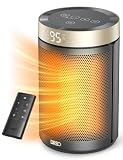
DREO Space Heater, Portable Electric Heaters for Indoor Use with Thermostat
- FAST HEATING & WIDER REACH: DELIVERS HEAT 200% FARTHER IN SECONDS!
- UNMATCHED SAFETY FEATURES: TIP-OVER PROTECTION & FLAME RETARDANT DESIGN.
- CUSTOM COMFORT: PRECISION CONTROL FROM 41-95℉ TO SUIT YOUR NEEDS.


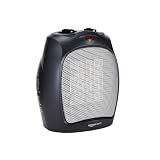
Amazon Basics Ceramic Space Heater, Portable Indoor Heating Solution, With Overheat and Tip-Over Protection, Thermostat, Non-Oscillating, 1500W, 7.52"D x 6.34"W x 9.45"H, Black
- CUSTOMIZABLE HEAT SETTINGS: CHOOSE HIGH, LOW, OR FAN-ONLY OPTIONS.
- COMPACT & PORTABLE DESIGN: EASY TO TRANSPORT FOR ANY SPACE.
- SAFE OPERATION FEATURES: EQUIPPED WITH TIP-OVER AND OVERHEAT PROTECTION.
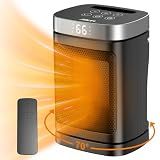
JIBUFI Portable Space Heater for Indoor Use with 70° Oscillation and Remote
-
RAPID 1500W HEATING: WARMS UP TO 200 SQ FT QUICKLY AND EFFICIENTLY.
-
COMPREHENSIVE SAFETY FEATURES: ETL CERTIFIED WITH TIP-OVER & FLAME-RETARDANT DESIGN.
-
VERSATILE OPERATION MODES: HIGH TO ECO SETTINGS WITH REMOTE FOR EASY CONTROL.
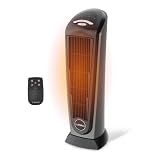
Lasko 23" Ceramic Tower Space Heater with Remote Control - Silver - 751320
- ENJOY EVEN WARMTH IN EVERY CORNER WITH 1500W CERAMIC HEAT!
- SAFETY FIRST: ETL CERTIFIED WITH OVERHEAT PROTECTION FOR PEACE OF MIND.
- CONVENIENT REMOTE CONTROL AND TIMER FOR PERSONALIZED COMFORT!
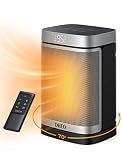
DREO Space Heater, Portable Electric Heaters for Indoor Use with Thermostat
- RAPID HEATING: 1500W POWER FOR INSTANT, BALMY WARMTH WHENEVER NEEDED.
- ULTIMATE SAFETY: ETL-LISTED WITH SHIELD360° FOR TIP-OVER & OVERHEAT PROTECTION.
- ENERGY EFFICIENT: ECO MODE AUTO-ADJUSTS HEAT, SAVING YOU MONEY ON BILLS.
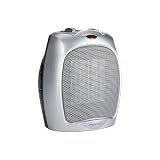
Amazon Basics Ceramic Space Heater, Portable Indoor Heating Solution, With Overheat and Tip-Over Protection, Thermostat, Non-Oscillating, 1500W, Fast Heating, 7.52"D x 6.34"W x 9.45"H, Silver
- CUSTOMIZABLE HEAT SETTINGS FOR PERSONALIZED COMFORT AND EFFICIENCY.
- COMPACT DESIGN MAKES IT EASY TO MOVE BETWEEN HOME AND OFFICE.
- RAPID HEATING TECHNOLOGY DELIVERS WARMTH IN MINUTES, QUIETLY.
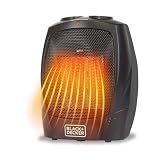
BLACK+DECKER Personal Ceramic Heater, 1500 Watts, BHDC201, Black
- STAY COZY ANYWHERE: IDEAL FOR HOME OR OFFICE, KEEPS YOUR SPACE WARM.
- VERSATILE SETTINGS: 3 MODES INCLUDING FAN, LOW, AND HIGH FOR COMFORT.
- SAFETY FIRST: TIP-OVER AND OVERHEAT PROTECTION FOR WORRY-FREE USE.
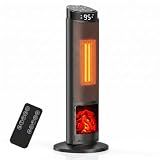
OLIXIS 23" Space Heater for Indoor Use, 70° Oscillation, 4 Modes
-
RAPID HEATING: 1500W POWER WARMS ROOMS IN SECONDS, ENSURING COMFORT FAST.
-
SMART CONTROL: ADJUST TEMP 50°F TO 95°F; SET 12-HOUR TIMER FOR EFFICIENCY.
-
SAFETY FIRST: TIP-OVER PROTECTION AND FLAME-RETARDANT MATERIALS FOR PEACE OF MIND.
Ceramic heaters account for a huge share of winter impulse buys because they’re cheap, compact, and easy to move room to room. They’re also one of the most returned small appliances after the first cold snap, usually for three reasons: too little heat, too much fan noise, or the wrong safety features for the space.
If you’re wondering How to Pick a Ceramic Space Heater in 2026?, the answer is simpler than most buying guides make it sound: match the heater’s wattage, safety certifications, thermostat accuracy, and room size performance to the exact room where you’ll use it. Get those four things right, and you’ll avoid most buyer’s remorse.
How we select products: Our team reviews heating products daily, analyzing customer ratings (4.0+ stars minimum), pricing trends, discount history, warranty terms, safety certifications, and large-scale buyer feedback to identify which models deliver the best real-world value.
How to Pick a Ceramic Space Heater in 2026? Start With Room Size, Not Marketing Claims
The biggest mistake people make is buying by headline terms like “fast heat” or “powerful ceramic element.” A ceramic space heater that works well in a 90-square-foot home office can feel underpowered in a drafty 250-square-foot bedroom.
For most indoor plug-in models, the practical ceiling is 1,500 watts on a standard 120V outlet. That usually covers about 100 to 150 square feet well in an insulated room, while larger rooms often need either better insulation, a closed door, or a supplemental heat source.
Here’s the quick sizing rule I use:
| Room type | Approx. size | Heater type that usually works best | What to expect |
|---|---|---|---|
| Desk nook, bathroom, dorm corner | 50–100 sq. ft. | Small portable space heater with tip-over shutoff | Fast personal warmth, not whole-room heating |
| Home office, nursery, small bedroom | 100–150 sq. ft. | Mid-size space heater ceramic tower or cube | Good comfort if doors stay closed |
| Master bedroom, living room section | 150–250 sq. ft. | Oscillating ceramic unit with accurate thermostat | Better as zone heat than full-room replacement |
| Garage, patio, workshop | 250+ sq. ft. or drafty | Not ideal for plug-in ceramic alone | Consider alternatives like a portable propane space heater or propane outdoor space heater for appropriate outdoor/ventilated use |
That last point matters. If you need heat in a drafty workshop or open patio, a ceramic unit often disappoints because it warms air, and moving cold air strips that heat away fast.
Our Selection Criteria: What Actually Separates a Good Ceramic Heater From a Bad One
If you want to know How to Pick a Ceramic Space Heater in 2026?, ignore flashy names and look at measurable traits. The best units consistently do five things well.
1. They hold a stable temperature
A cheap thermostat can swing 4 to 8 degrees Fahrenheit before cycling back on. Better models keep the room within 2 to 3 degrees, which feels more comfortable and reduces the constant hot-cold roller coaster.
2. They include non-negotiable safety features
A 2026-worthy heater should have, at minimum:
- Tip-over protection
- Overheat shutoff
- Cool-touch housing
- Plug and cord rated for 1,500W use
- A recognized electrical safety certification
If a listing is vague about safety testing, skip it.
3. They don’t fake “quiet” performance
Most ceramic fan heaters produce 35 to 55 dB depending on speed. If you’re placing one next to your desk or bed, fan noise matters almost as much as heating speed.
4. They have enough review history to reveal defects
A product with 4.4+ stars across hundreds or thousands of reviews is usually a safer bet than a fresh listing with only a few dozen ratings. That’s where patterns like thermostat failure, burning smell complaints, or weak oscillation start to show up.
5. They fit the space physically
A tall tower heater may spread heat better across a room, while a compact cube can work better under a desk. Buyers often focus on wattage and forget that airflow direction and placement height affect comfort just as much.
How to Pick a Ceramic Space Heater in 2026? Use These 7 Specific Buying Criteria
You don’t need a spreadsheet, but you do need a checklist. These seven criteria catch almost every bad purchase before it happens.
1. Check wattage first
For standard indoor electric models, 1,500W is the common max. If two heaters have the same wattage, the difference is usually in fan design, thermostat quality, and air distribution, not raw heating power.
2. Look for thermostat increments you can actually use
A basic low/high dial is less useful than a digital thermostat with setpoints. If you can set 68°F, 70°F, or 72°F, you’ll waste less energy than guessing with a vague knob.
3. Measure the footprint
A heater that sticks 10 to 12 inches into a walkway is a tip-over risk in small apartments. For bedrooms and offices, compact depth matters more than catalog photos suggest.
4. Prioritize safety over smart features
Wi-Fi control is nice. Tip-over shutoff is essential.
If a “smart” model cuts corners on housing stability or overheating protection, it’s the wrong buy.
5. Check the cord length and plug orientation
Many ceramic heaters still ship with cords around 5 to 6 feet. That sounds fine until your only safe outlet is across the room and you realize extension cords are a bad idea for high-wattage heaters.
6. Read low-star reviews for patterns, not drama
One angry review means little. Ten reviews mentioning the same rattling fan or overheating shell usually means the defect is real.
7. Match the heater to your use case
- For under-desk heat: choose a compact forward-blowing unit
- For bedroom use: choose a quieter heater with a stable thermostat
- For family rooms: choose oscillation and wider air spread
- For occasional travel or guest rooms: choose lighter weight and easy carry handle
Pro tip: A ceramic heater with oscillation often feels warmer at the same thermostat setting because it spreads warm air across more of the room instead of creating one hot spot. That can improve comfort without increasing wattage.
Best Budget Range Under the Entry Tier: What to Expect From Basic Ceramic Heaters
The lowest-priced models can work, but only in small, controlled spaces. Think under-desk use, small bedrooms, or short bursts of heat while getting ready in the morning.
This is the price bracket where buyers often search space heater at walmart, space heater in walmart, space heater from walmart, or space heater walmart because they want something fast and affordable. That’s reasonable, but the tradeoff is usually a less precise thermostat and louder fan operation.
Best use cases in this bracket:
- Dorm rooms
- Small offices
- Bathrooms used briefly
- Supplemental heat near seating
Watch for these compromises:
- Fewer temperature settings
- More plastic vibration noise
- Narrower heat spread
- Shorter warranty coverage
If you’re comparing shelves at a big-box store like walmart space heater listings or a space heater from walmart, choose the model with the clearest safety labeling and the strongest review depth, not the one with the biggest “heats fast” claim.
The $25–$50 Sweet Spot Is Usually the Best Value for Most Buyers
This is where ceramic heaters get meaningfully better. You typically see improved thermostat control, oscillation, timer functions, and more stable housings.
For most people asking How to Pick a Ceramic Space Heater in 2026?, this is the best category to shop first. It’s where performance and safety tend to improve without entering the diminishing-returns zone.
What you’ll usually get in the sweet spot:
- 1,500W max output
- Digital thermostat
- Oscillation
- 8- to 12-hour timer
- Better tip-over base design
- Lower complaint rates for odor and fan rattle
Search behavior backs this up too. Shoppers often compare terms like dreo space heater, dero space heater, lasko space heater, and lasko heater space heaters in this range because those queries reflect feature-driven shopping rather than pure bargain hunting.
If you’re researching heater mechanisms and how electric heating components fail over time, there’s useful technical context in more on testing procedures for hot tub heating elements.
Premium Picks Over $50: What You’re Really Paying For
Above the midrange, you’re rarely paying for dramatically more heat. You’re paying for better controls, quieter fans, improved housing quality, wider oscillation, and sometimes smarter eco modes.
That distinction matters. A premium ceramic heater is not magically twice as warm as a midrange one if both top out at 1,500W.
Premium models are best if you want:
- Overnight bedroom use with lower noise
- More exact temperature control
- Better fit and finish
- Wider-angle oscillation
- Easier-to-read displays
- More polished safety engineering
If your use case is daily winter heating for several hours, premium can be worth it. If you just need ten minutes of warmth under a desk, it usually isn’t.
What Real Reviews Reveal: 5 Red Flags That Predict a Bad Ceramic Heater
Large review sets are brutally honest. After reading enough of them, the same warning signs appear again and again.
1. Ratings below 4.2 stars usually hide repeat issues
Once a heater drops below 4.2 stars, complaints often cluster around thermostat inaccuracy, poor lifespan, or weak airflow. That doesn’t mean every low-rated unit is terrible, but the odds get worse fast.
2. “Burning smell” that lasts longer than break-in
A slight odor for the first few uses can happen as manufacturing residues burn off. If reviews say the smell persists after 3 to 5 heating cycles, that’s a red flag.
3. Tip-over complaints from pet owners and parents
If multiple reviewers mention a narrow base or wobble on carpet, take that seriously. A heater near kids, cats, or dogs needs a stable footprint.
4. Fan rattle after a few weeks
This is one of the most common durability complaints in lower-end heaters. A rattling fan often means the heater becomes too annoying for bedroom use even if the element still works.
5. Weak airflow despite 1,500W specs
Two heaters can both claim 1,500W yet feel completely different. Better fan design moves warm air farther, while weaker airflow creates a hot bubble near the unit and leaves the room chilly.
For another example of how overheating complaints show up in other appliance categories, you can take a look at broader thermal-failure patterns.
Ceramic Heater vs Infrared vs Propane: Which Type Makes Sense in 2026?
A lot of shoppers don’t actually need ceramic. They need the right heating method.
Ceramic heaters: best for fast, targeted indoor heat
A portable space heater with a ceramic element heats quickly and works best in bedrooms, offices, and small living areas. It’s the most practical choice for people who want instant warmth and simple plug-in use.
Infrared heaters: best for steady, directional comfort
Infrared models can feel gentler and quieter because they often focus more on radiant warmth than fan-driven airflow. They’re good in rooms where you sit in one place for a while.
Propane heaters: best for outdoor or highly ventilated work areas
A portable propane space heater or propane outdoor space heater can outperform electric ceramic units in open garages, job sites, or patios. They are not a one-to-one substitute for indoor ceramic heaters, and ventilation rules matter.
If you’re browsing mixed heater categories online, you’ll sometimes see unrelated buying paths like weighted heating pad offers explained or even aquatic heater content such as read more here, but don’t let those distract you from matching the heater to the room and ventilation conditions.
Is a Ceramic Space Heater Worth Buying in 2026?
Yes-if you need zone heating, not whole-home heating.
A ceramic heater is worth it when you want to warm the room you’re actually using instead of raising the thermostat for the entire house. In many homes, heating a single office or bedroom for a few hours is more practical than pushing central heat throughout unused space.
It’s not worth it if you expect one small plug-in heater to solve a drafty basement, large open-plan living room, or garage. That’s where disappointment starts.
Where Shoppers Get Confused: Store Search Terms vs Real Performance
Retail searches can create false confidence. People search space heater walmart, space heater at walmart, or space heater in walmart because availability feels reassuring, but store placement tells you almost nothing about thermostat accuracy, sound profile, or long-term durability.
The same goes for brand-led searches like mr heater space heater, dreo space heater, dero space heater, or lasko space heater. A familiar search term can help narrow the field, but the unit’s base stability, thermostat range, noise, and review consistency are what determine whether it actually performs well in your room.
For broader appliance overheating behavior, more info can help you understand why thermal shutdown systems are so valuable.
There’s also a useful analogy in temperature-dependent systems outside home heating; if you want a simple primer, the compost not heating up reasons resource shows how environmental conditions can completely change heat performance. And yes, odd retailer trails occasionally lead to pages like www.google.com.lb, which is a good reminder to verify sources before trusting any heater advice.
The Single Best Recommendation for Most Buyers in 2026
If you want the safest all-around bet, choose a 1,500W ceramic space heater with tip-over shutoff, overheat protection, a digital thermostat, and enough review history to prove reliability. That formula beats flashy extras almost every time.
If I had to reduce How to Pick a Ceramic Space Heater in 2026? to one rule, it would be this: buy for the room’s actual square footage and safety needs first, then compare convenience features second. A stable, accurately controlled heater in the right-size room will outperform a “premium” model used in the wrong space.
Frequently Asked Questions
how to pick the right size ceramic space heater for a bedroom?
For most bedrooms, a 1,500W ceramic space heater works best in rooms around 100 to 150 square feet with the door closed. If the room is larger or poorly insulated, expect slower heating and use the heater as zone heat rather than a full-room replacement.
what is the difference between a ceramic space heater and an infrared heater?
A ceramic heater warms air using a heated ceramic element and fan, so it delivers faster whole-area warmth. An infrared heater focuses more on radiant heat, which can feel more direct and often runs quieter in seated spaces.
is a ceramic space heater worth it for saving on heating bills?
Yes, if you use it to heat one occupied room instead of raising whole-house central heat. It usually makes the most sense for home offices, bedrooms, and other spaces where you spend several hours at a time.
are ceramic space heaters safe to leave on overnight?
They’re safer than many people think if they include tip-over protection, overheat shutoff, and a stable base, but overnight use still requires care. Keep at least 3 feet of clearance around the heater and avoid placing it near bedding, curtains, or overloaded outlets.
what should I avoid when buying a space heater at walmart or online?
Avoid heaters with vague safety descriptions, ratings below 4.2 stars, or repeated complaints about odor, rattling, or weak airflow. Whether you shop a walmart space heater listing or another retailer, review patterns matter more than shelf placement or marketing claims.