
Best Hiking Poles in October 2026
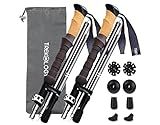
TREKOLOGY Trek-Z Cork Grip Trekking Poles – Lightweight Folding Hiking Poles, Adjustable Height, Compact Travel Design, Aircraft-Grade Aluminum Walking Sticks for Men & Women
-
ERGONOMIC DESIGN & CORK GRIPS FOR ULTIMATE COMFORT & SWEAT REDUCTION.
-
AIRCRAFT-GRADE ALUMINUM: STRONG, LIGHTWEIGHT, & BUILT TO LAST.
-
COLLAPSIBLE DESIGN: FOLDS TO 15 INCHES FOR EASY, PORTABLE TRAVEL.


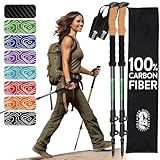
100% Carbon Fiber Trekking Poles by USA Brand - Ultra Strong Lightweight Collapsible Hiking Poles with Cork and EVA Foam Grips & Quick Adjustable Flip Locks
- ULTRA-LIGHTWEIGHT: 3K CARBON FIBER POLES WEIGH JUST 7.6 OZ EACH.
- ERGONOMIC COMFORT: MOISTURE-WICKING CORK GRIPS FOR A SECURE FIT.
- RELIABLE STABILITY: SECURE FLIP LOCK TECHNOLOGY FOR ULTIMATE STRENGTH.
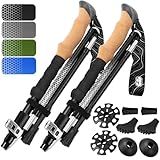
Premium Foldable Hiking Poles by USA Brand - Adjustable, Lightweight Trekking Poles Made of Aircraft Aluminum, Metal Locks Cork EVA Grips (Cork - Black, 100-120 cm for Height: 5'9" and Smaller)
-
COMPACT SIZE: COLLAPSES TO 15 INCHES; FITS EASILY IN ANY BAG.
-
LIGHTWEIGHT STRENGTH: AT JUST 9.95 OZ, PERFECT FOR HIKING OR SKIING.
-
ADJUSTABLE HEIGHTS: CUSTOM SIZES FOR ALL HEIGHTS, 100CM TO 135CM.
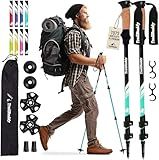
TrailBuddy Trekking Poles – Lightweight 7075 Aluminum Hiking Poles for Women, Men & Seniors – Collapsible Walking Sticks for Travel, Trails & Balance
- DURABLE & LIGHTWEIGHT DESIGN: BUILT TOUGH FROM AIRCRAFT-GRADE ALUMINUM.
- QUICK-ADJUST HEIGHT: EASILY SET FROM 24.5 TO 54 IN SECONDS!
- COMFORTABLE GRIP: MOISTURE-WICKING CORK HANDLES FOR SECURE HOLD.
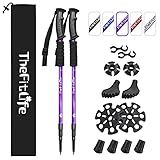
TheFitLife Trekking Poles - 2 Packs with Antishock and Quick Lock, Telescopic, Ultralight - For Hiking, Camping, Trekking
-
COMPACT DESIGN: COLLAPSES TO FIT IN MOST 22+ SUITCASES EASILY.
-
LIGHTWEIGHT STRENGTH: EACH POLE WEIGHS JUST 9.92 OZ FOR EASY CARRYING.
-
QUICK ADJUSTMENTS: SIMPLE TWIST-LOCK SYSTEM FOR FAST HEIGHT CHANGES.
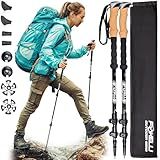
Foxelli Carbon Fiber Trekking Poles – Lightweight Collapsible Hiking Poles with Cork Grips, Quick Flip Locks & All-Terrain Accessories – Adjustable Height Hiking Sticks for Men & Women
- ULTRA-LIGHT CARBON FIBER: HIKE LONGER, FEEL LESS FATIGUE!
- DURABLE & SECURE: FLIP-LOCKS ENSURE CONFIDENCE ON ANY TERRAIN.
- CUSTOM COMFORT: ERGONOMIC GRIPS REDUCE STRAIN FOR ALL-DAY HIKES.
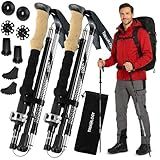
TREKOLOGY Trek-Z Collapsible Hiking & Trekking Poles - Balance Support for Seniors, Women, and Men, 2pc Per Set
-
CUSTOMIZE YOUR FIT: INNOVATIVE FLIP-LOCK SYSTEM FOR PERFECT HEIGHT.
-
LIGHTWEIGHT & DURABLE: MADE FROM AIRCRAFT-GRADE ALUMINUM FOR STRENGTH.
-
COMPACT & PORTABLE: FOLDS TO 15 INCHES FOR EASY TRAVEL AND STORAGE!
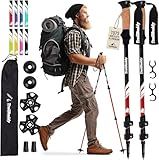
TrailBuddy Trekking Poles – Lightweight 7075 Aluminum Hiking Poles for Women, Men & Seniors – Collapsible Walking Sticks for Travel, Trails & Balance
- DURABLE 7075 ALUMINUM POLES ENSURE LONGEVITY ON ALL TERRAINS.
- QUICK-ADJUST HEIGHT SUITS ADULTS AND KIDS FOR SHARED ADVENTURES.
- COMPACT DESIGN EASILY FITS IN BACKPACKS, PERFECT FOR TRAVEL.
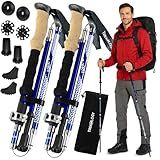
TREKOLOGY Trek-Z Collapsible Hiking & Trekking Poles - Balance Support for Seniors, Women, and Men, 2pc Per Set
- LIGHTWEIGHT, DURABLE DESIGN PERFECT FOR ALL-DAY HIKES AND TRAVEL.
- CUSTOMIZABLE HEIGHT ADJUSTMENT FOR USERS OF ALL SIZES AND AGES.
- ERGONOMIC GRIPS AND MUD STOPS ENSURE COMFORT AND FIRM CONTROL.
5 Walking Poles Hiking Tips in 2026 matters more than most hikers think, because trekking poles can cut knee load by up to roughly 20–25% on descents and improve stability when your pack pushes your center of gravity off balance. I’ve seen that difference firsthand on loose switchbacks: the hikers using poles stay upright and controlled, while the no-pole crowd often side-steps downhill with tired quads by mile six.
The catch is that poles only help if you size, adjust, and use them correctly. A bad setup can leave your shoulders tight, your wrists sore, and the carbide tips clicking uselessly across rock.
If you want poles that actually make hiking easier in 2026, this guide covers the five tips that matter most, what features are worth paying for, what review patterns signal trouble, and how to match your budget to the trail you actually hike.
How we select products: Our team reviews outdoor gear data daily, analyzing customer ratings, durability complaints, adjustment-system failures, pricing trends, and real buyer feedback across major retailers. For hiking poles, we prioritize models with 4.0+ star averages, solid lock reliability, low breakage rates, and materials that make sense for real trail use rather than marketing copy.
Why do 5 Walking Poles Hiking Tips in 2026 matter more now than they did a few years ago?
Trail gear has changed fast. In 2026, more hikers are choosing lightweight trekking poles, foldable designs, and shock-conscious setups for longer day hikes, thru-hikes, and uneven terrain where ankle fatigue builds quickly.
At the same time, online listings have become crowded with near-identical options. Many look similar in photos, yet review data often shows a huge gap between poles that last 100+ trail miles and poles that start slipping at the locks within the first month.
That’s why the best 5 Walking Poles Hiking Tips in 2026 are less about hype and more about setup, materials, and buying filters you can verify.
What’s the first of the 5 Walking Poles Hiking Tips in 2026? Get the height exactly right
The fastest way to make good poles feel bad is to use the wrong height. For most hikers on flat ground, your elbow should sit at about a 90-degree angle when the pole tip touches the ground near your foot.
That baseline changes with terrain:
- Shorten poles by 5–10 cm on climbs so your shoulders stay relaxed
- Lengthen poles by 5–10 cm on descents to keep your torso upright
- For side-hilling, shorten the uphill pole and lengthen the downhill pole
On steep descents, this small adjustment reduces that “falling forward” feeling that pounds your knees. If you’ve ever finished a downhill section with burning quads, improper pole length was probably part of the problem.
Fixed-length vs adjustable poles: which works better for most hikers?
Adjustable poles win for most people because trail angle changes constantly. A fixed-length pole can work for flat walking, but it’s limiting once you hit technical trails, stream crossings, or loaded backpacking routes.
If you’re also dialing in footwear for better stability, it’s worth comparing your pole choice with your boot setup using Writeas.
How do you choose pole material in 5 Walking Poles Hiking Tips in 2026 without overpaying?
Material affects three things immediately: weight, vibration, and failure mode. Aluminum poles are usually a little heavier, but they tend to bend before snapping, which matters if you wedge a pole between rocks.
Carbon fiber poles are lighter and damp trail chatter better. However, under a sharp side load, they’re more likely to crack suddenly rather than deform.
Here’s the practical breakdown:
- Aluminum: better for rocky terrain, heavier packs, and hikers hard on gear
- Carbon fiber: better for speed, long mileage, and reducing arm fatigue
- Hybrid builds: useful if you want lower weight without sacrificing too much durability
For many hikers, the weight difference between entry-level aluminum and lighter poles is only a few ounces per pair. That sounds minor, but over 10,000 to 15,000 arm swings in a long hike, you feel it.
Cork, foam, or rubber grips?
Grip material matters more than new hikers expect.
- Cork grips mold well over time and manage sweat better in hot weather
- Foam grips feel soft and light, especially on long climbs
- Rubber grips insulate well in cold conditions but can feel clammy in summer
I usually recommend cork or foam for three-season hiking. If your hands sweat heavily on warm climbs, cork tends to stay comfortable longer.
Which locking system actually holds up? The most overlooked part of 5 Walking Poles Hiking Tips in 2026
A pole is only as good as its lock. I’ve used poles that felt perfect out of the box, then started collapsing under load after a few muddy weekends because the adjustment mechanism couldn’t keep tension.
The most reliable options are usually:
- External lever locks for easy field adjustment and visible tension control
- Push-button folding systems for compact storage and fast deployment
- Twist locks only if review history shows low slippage rates
External lever locks are easier to clean after dust, grit, and rain. Twist locks can work, but they’re more sensitive to wear and user error, especially if the internal expander gets slick.
Pro tip: If a pole listing has lots of comments about “slipping under body weight,” skip it. Even a 4.1-star average can hide a pattern if the most recent 50 reviews mention lock failure on descents.
What should you look for before buying? A numbered checklist that saves money
This is where the buying decision gets easier. If you compare poles using the same criteria every time, bad options drop out fast.
1. Weight per pair
For most day hikers, a pair in the light-to-midweight range feels best. Ultralight options are attractive, but if they sacrifice lock reliability, the savings aren’t worth it.
2. Packed length
If you travel, scramble, or strap poles to a daypack, check the folded or collapsed size. A compact length matters on buses, flights, and steep sections where you need your hands free.
3. Lock reliability
Look for review patterns over at least 200+ ratings. A high score with low volume tells you less than a slightly lower score with hundreds of detailed trail reports.
4. Grip and strap comfort
Your wrist strap should support your hand without rubbing. Poorly stitched straps and hard grip edges show up in reviews fast, especially after 8+ mile hikes.
5. Tip and basket compatibility
You want replaceable carbide tips, removable baskets, and access to rubber tip covers if you walk on pavement. Worn tips reduce traction on wet rock more than most hikers realize.
6. Warranty length
A longer warranty often signals better confidence in shaft strength and lock components. On poles, a warranty difference of even 1 to 3 years can tell you a lot about expected lifespan.
If you’re comparing traction and foot comfort alongside poles, these guides on wide toe box hiking boots and Fitprops help round out the setup.
Where do most shoppers overspend? Budget breakdown for hiking poles in 2026
Most hikers don’t need the most expensive pair. They need the pair that matches trail frequency, terrain, and pack weight.
Best options under the entry-level sweet spot
This category works for casual hikers doing local trails, mellow elevation, and a few trips each month. Expect decent adjustability, basic baskets, and serviceable grips, but inspect reviews carefully for lock slippage and tip wear.
The biggest risk in this bracket is inconsistency. One batch may perform well, while another gets complaints about loose joints after 20–30 miles.
The mid-range sweet spot most hikers should target
For most people, this is the value zone. You typically get better lock mechanisms, lower weight, more comfortable grip shapes, and fewer complaints about shaft flex.
If you hike monthly or carry a moderate pack, this is usually the best balance of longevity and performance. You’ll notice the difference on descents and stream crossings, not just on a spec sheet.
Premium picks over the upper bracket
Premium poles make sense if you hike long distances, care deeply about weight savings, or want compact foldable poles for travel and fastpacking. The performance gain is real, but only if you actually hike often enough to benefit from it.
If you’re shopping across retailers, comparing options through https://bloggerhives.blogspot.com can help you spot variations in stock, bundled accessories, and seasonal discounts.
What do real reviews reveal about bad poles in 2026?
Review sections usually repeat the same warning signs. Once you know them, you can filter weak products in under five minutes.
Red flags that show up again and again
- Locks slipping during descents
- Tips wearing down unusually fast
- Straps fraying within a few hikes
- Noticeable rattling after repeated adjustments
- Grip separation in heat or heavy sweat conditions
One pattern I trust: if reviewers mention collapse under load, I move on immediately. A pole that fails on flat trail is annoying; a pole that fails during a rocky descent is a safety issue.
Ratings threshold that’s actually useful
I’d rather buy a pole with 4.4 stars across 800 reviews than one with 4.8 stars across 29 reviews. Volume matters because durability complaints tend to appear after longer use, and bigger review pools reveal them faster.
💡 Did you know: Replaceable pole tips can extend usable life dramatically. Once carbide tips round off, traction on slick rock and hardpack drops enough that even a well-built pole starts feeling unstable.
How should you actually use poles on trail? Technique makes more difference than upgrades
Plenty of hikers buy good gear and still use it poorly. The result is wasted energy instead of added stability.
Here’s the technique that works best for most trails:
- Plant the pole lightly, not like a cane
- Keep the tip close to your body, not far out in front
- Match pole rhythm to your natural stride
- Use straps to transfer load through the wrist, not a death grip through the hand
- On descents, place poles slightly ahead for balance, but don’t lock your elbows
If your hands ache after an hour, you’re probably gripping too tightly. If your shoulders feel bunched up, your poles are likely too long.
For longer routes, your poles also work alongside hydration and water treatment strategy. If you’re still building your kit, check a guide to the best water filter for hiking so your pack weight and support system stay balanced.
Are accessories worth it, or just clutter?
Some accessories help. Some just add weight.
Useful extras include:
- Snow baskets for winter or soft terrain
- Mud baskets for shoulder-season trails
- Rubber tip covers for road walks and travel
- Lower grip extensions for quick climbing adjustments without stopping
Less useful are oversized add-ons that make poles bulkier without solving a real problem. If you mostly hike maintained trails, you can skip most extras and spend that budget on better shafts or more reliable locks.
If you want to compare broader gear-buying rabbit holes, some shoppers oddly land on unrelated redirects like www.google.ca or a full article, but for poles, the real value comes from checking lock quality, material, and long-term reviews.
So what’s the single smartest buying move in 5 Walking Poles Hiking Tips in 2026?
Buy the pole with the most reliable lock system that fits your hiking style, even if it weighs a little more. A few extra ounces are far less annoying than a pole that slips, rattles, or folds when you need support on a descent.
Frequently Asked Questions
Are walking poles really worth it for hiking beginners?
Yes, especially if you hike steep trails, carry a loaded pack, or deal with sore knees on descents. Beginners usually notice better balance first, then reduced leg fatigue after a few longer hikes.
What size walking poles should I use for hiking?
Start with a height that gives you about a 90-degree elbow bend on flat ground. Then shorten them for uphill hiking and lengthen them slightly for downhill sections.
Are carbon fiber or aluminum walking poles better for hiking in 2026?
Carbon fiber is better if you want lower weight and less vibration over long miles. Aluminum is usually the safer pick if you hike rocky trails, carry heavier loads, or want a pole that bends rather than cracks.
How much should I spend on hiking poles if I only hike once or twice a month?
A mid-range pair is usually the smartest buy because it offers noticeably better lock reliability and comfort than the cheapest options. If you hike easy local trails only, an entry-level pair can work, but read recent reviews closely for slipping and tip wear.
Do I need trekking pole accessories like baskets and rubber tips?
You need them only if your terrain calls for them. Baskets help in mud, snow, and soft ground, while rubber tips are useful for pavement, travel, and reducing noise on hard surfaces.